
In each venue's own words
Restaurants, pizzerias, bakeries and pasticcerias across Italy — in 338 cities and counting.
About
How a venue gets listed
A venue is added to our list solely on the basis of an official statement by the venue itself, published on its own website or its own social channels, in which it explicitly states how it handles gluten-free food.
Third-party reviews, blogs and directories can help us find new venues to check, but they never count as a valid basis for listing one.
Open a card and you will find the venue's statement reproduced in full, word for word, exactly as it was published. The original source is always given, together with the date of the last check.
No interpretation, no reworking: if the venue's words matter to your health, you can consult the original source directly with a single tap.
What we never do
We never call a venue “safe for coeliacs”. We do not award any certification or guarantee of safety ourselves. We report only what the venue states, leaving the final judgement to you.
We never charge for safety information. Badges, statements, quotations and sources are always free and accessible to everyone.
We do not copy the AIC database. If a venue itself states that it belongs to the AIC programme or has completed specific training, we report that information solely as the venue's own statement.
We never include unverifiable information. No hearsay, assumptions or rumours: if a statement cannot be found on an official channel of the venue, the card is not published.
We do not paraphrase, and we make no promises on a venue's behalf. Their words remain their words. We do not alter them, and we do not attribute to them guarantees they have not expressed.
Free access and regular re-checks
You do not need to register or pay anything to consult the information. Every card, statement, source and note available is freely accessible to everyone.
Transparency does not stop at publication: every card carries the date of its last check and is re-checked periodically.
If a venue's official statement changes, we update the card. If it can no longer be verified, the card is reviewed again and, if necessary, removed.
Our commitment is simple: to report verifiable information, respect the venues' own words, and leave you free to judge — without filters and without promises made on their behalf.
Booking links are affiliate links: booking through them may earn us a commission at no extra cost to you. Listings are never paid — every hotel is listed only on its own gluten-free statement, and every hotel gets the same link.
Reading
Newly diagnosed? Start with the first chapter. Then: how labels work in Italy, and what AIC is — and what it is not. The cards to show at the table live in the Communicate tab.
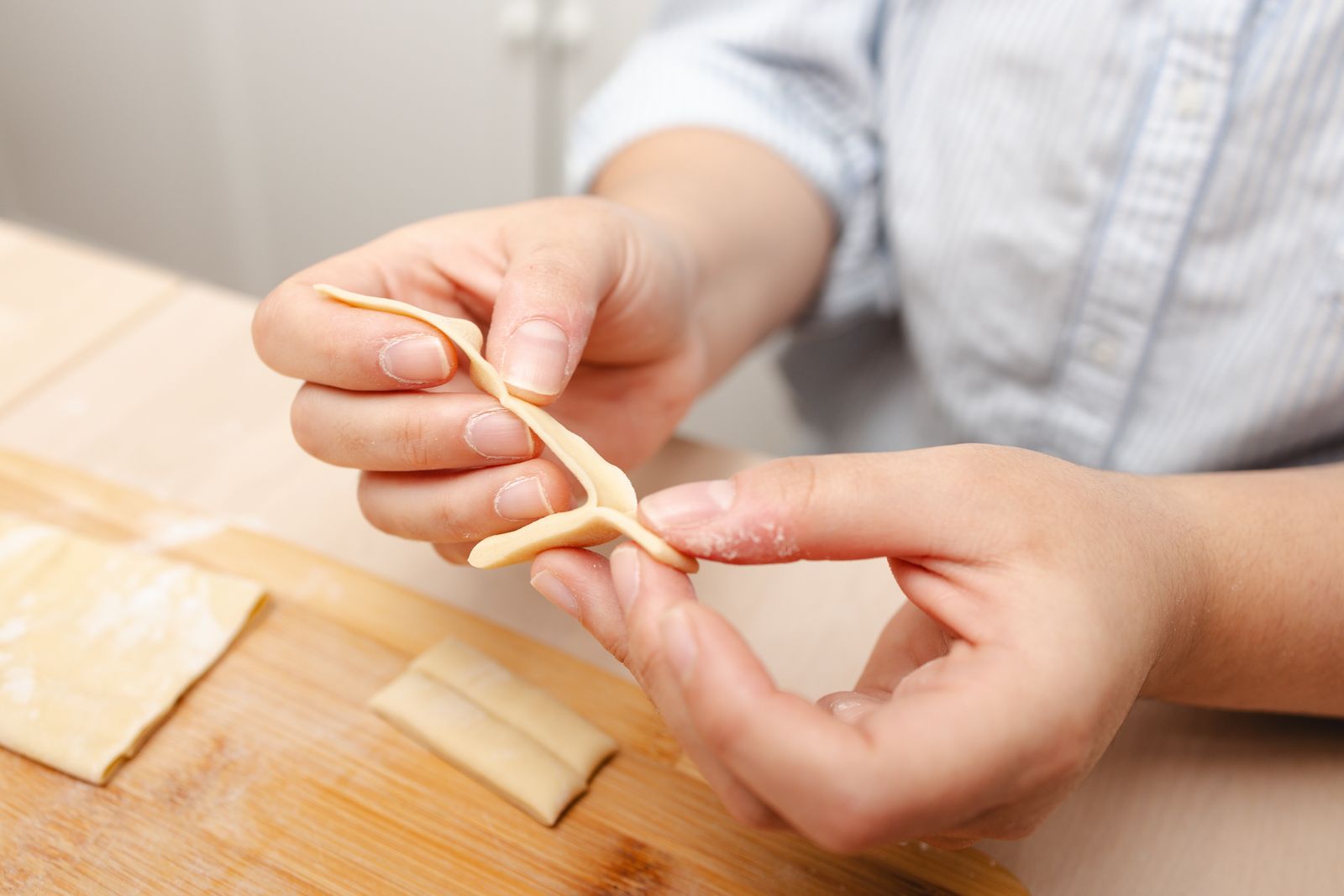
A coeliac diagnosis changes everyday habits more than it changes the food itself: most of Italian cooking is still open to you. What changes is how you check, ask and choose. This chapter is the short version — the practical first steps in Italy, and where the Italian system helps. It is general information, not medical advice: your diagnosis centre and your ASL (local health authority) are the reference for your own case.
The first weeks
The treatment for coeliac disease is a gluten-free diet, followed for life — no medicine replaces it. In the first weeks the useful moves are unglamorous: learn the handful of words that matter on a label (the next section of this guide), clear the obvious risks at home — a shared toaster, wooden spoons, flour in the air — and keep your follow-up appointments. The diagnosis usually comes with a dietitian's visit; that conversation is worth more than any list, including this one.
Eating out, from now on
Say it plainly and early — «Sono celiaco» (“I am coeliac”) — before ordering, not when the dish arrives. Ask what can be made without gluten and how it is prepared; a kitchen that answers precisely is telling you something. The chef cards in the Communicate tab put the key sentences on one card to show staff. And every venue in this guide is listed on its own published statement, quoted word for word on its card — so you can read what a place promises before you go.
Labels, in one line
Packaged food is the easy part once you know the rules — the next section of this guide, “Reading an Italian label”, covers them: the senza glutine claim, the highlighted allergens and the Spiga Barrata symbol. Read that, and the supermarket gets quieter.
The Italian system: vouchers, pharmacies, the register
Italy recognises coeliac disease as a social condition (Law 123/2005), and the national health service (SSN) covers part of the extra cost of eating gluten-free. The path starts with the diagnosis, which must be certified by one of the accredited centres in the regional network. With that certification, your ASL district registers your exemption (code 059), which covers the follow-up visits and tests for the condition.
The same registration activates the food provision: a monthly amount for buying gluten-free staple products — set nationally by age and sex, from €56 to €124 a month under the current ministerial decree — today usually electronic, loaded on your health card (tessera sanitaria) and spent with a personal PIN. It is spent in pharmacies, specialist shops and affiliated supermarkets, within your own region.
Only some products qualify: those listed in the Registro Nazionale, the Ministry of Health's national register of gluten-free foods, carrying the wording «senza glutine, specificamente formulato per celiaci» and falling in the staple categories — bread and savoury baked goods, pasta and pizza, ready mixes, sweet baked goods and breakfast cereals. Foods that are naturally gluten-free, like rice or vegetables, are not part of the provision: everyone buys those the ordinary way. Pharmacies are a normal place to buy registered products, and staff there can check whether a product is in the register.
Two more pieces of the same system: school canteens and other public canteens must provide gluten-free meals on request, and AIC — the Associazione Italiana Celiachia — is the national patient association, a useful door to local groups and up-to-date information. Details and forms differ by region: your ASL and your region's health pages are the ones that apply to you.
Under EU rules, a product may be labelled senza glutine (gluten-free) only if it contains no more than 20 parts per million of gluten. That claim — not a brand, not a shop assistant — is what makes a sealed pack a gluten-free product.
- Highlighted allergens. Allergens are highlighted inside the ingredient list: FRUMENTO, ORZO, SEGALE, FARRO and AVENA stand out in bold or capitals when present.
- The Spiga Barrata. The crossed grain is a licensed symbol administered in Italy by AIC; products carrying it are certified against the crossed-grain standard and show an Italian licence code (IT-…). A pack can be legally senza glutine without it — the symbol is an extra certification, not the claim itself.
- The long wording. “Specificamente formulato per persone intolleranti al glutine” (specifically formulated for people intolerant to gluten) is the fuller legal wording you will see on many packs.
- The national register. Italy also keeps a national register (Registro Nazionale) of gluten-free products maintained by the Ministry of Health — the list behind the state voucher scheme for people diagnosed with coeliac disease in Italy.
AIC is the Associazione Italiana Celiachia, Italy's coeliac association. Among other work it runs Alimentazione Fuori Casa (“eating out”), a programme under which restaurants, pizzerias and bakeries are informed and trained on preparing gluten-free food, and it licenses the Spiga Barrata symbol on packaged products.
AIC's own venue database belongs to AIC and is not reproduced here — not copied, not scraped, not summarised. If a card in this guide mentions AIC, it is because the venue itself states its AIC membership, certification or training on its own pages, and the card says so in those terms. The basis of every listing remains the venue's own statement, quoted verbatim.
Eating out is only half of living here. These recipes build classic Italian dishes around the ingredient categories in the Shop section further down this page — so the bag you bought doesn't sleep on the shelf. The index and the first three recipes are free in full; the rest of the library is Premium.
The chains' gluten-free lines
Assortments vary from store to store — the pack in your hand has the last word.
- Esselunga Equilibrio Senza Glutine Look for the words senza glutine in the product name itself — the Equilibrio line also covers lactose-free and other products. Esselunga's own page ↗ Find a store near you ↗
- Coop Bene.Sì Look for the green packs: AIC-certified, carrying the Spiga Barrata (crossed grain) symbol. Coop's own page ↗ Find a store near you ↗
- Conad Alimentum Look for the wording “specificamente formulato per persone intolleranti al glutine” on the pack; several also carry the crossed grain symbol. Alimentum on Conad's shop ↗ Find a store near you ↗
- Carrefour Carrefour No Gluten Look for “No Gluten” in the name — some products sit under Carrefour Classic as “No Gluten!”; the small print states the product is gluten-free. No Gluten on Carrefour's own site ↗ Find a store near you ↗
Pharmacies
Pharmacies are the other place to buy gluten-free in Italy: they stock gluten-free products, and the state provision's registered products (Registro Nazionale) are bought there too — the amount sits on your health card (tessera sanitaria) and is spent with your PIN celiachia. Staff can check whether a product is in the register. How the provision works is explained in the “Just diagnosed? Start here” chapter above.
Find a pharmacy near you ↗Six podcasts about celiac disease and living gluten free — four in Italian, then two in English. Each show links to its own page.
Celiachia alla radio
Italian · Short weekly episodes on celiac life in Italy, hosted by Ilaria Borgnoli — launched September 2026.
Tutta un'altra farina
Italian · Radio Nostalgia series with Valentina Leporati and Andrea Secci — season 1 complete: 14 episodes, February–May 2026.
- Cos'è la Celiachia? La Storia di Valentina Leporati (Come l'ha Scoperta)
- Celiaco al Ristorante: Le App per Trovare Posti Sicuri (Zero Rischi)
- Celiaco in Viaggio: App e Consigli Utili per Mangiare Senza Rischi
- Buoni Spesa Celiachia: Quanto Prende al Mese un Celiaco? (Importi Reali)
- TUTTA UN'ALTRA FARINA – ULTIMA PUNTATA DELLA STAGIONE
Free Food Cast — Parliamo senza glutine
Italian · Slurp's talk show on gluten-free food and eating out; several episodes made with AIC Lombardia. New episodes are announced on the show's Instagram, with the listen links in its bio.
- Chi è AIC e cosa fa
- Programma Alimentazione Fuori Casa AIC: cos'è e perché è importante
- Dieta senza glutine: scopriamo il sorgo con Monia Caramma
- Perché mangiare fuori casa anche in locali non 100% senza glutine
A cena col celiaco
Italian · Interview series hosted by Diletta Begali — a completed series of 12 episodes (2024–2025), sponsored by Céréal Senza Glutine.
Inside Celiac
English · The Celiac Disease Foundation's podcast, hosted by Katie Lowes — monthly, launched October 2026; two episodes so far.
The Celiac Project Podcast
English · “2 Guys Talking Gluten Free” with Michael Frolichstein and Cam Weiner — running since 2016, more than 460 episodes.
- Gluten Free Street Gang: Matt Bzdel on Gluten Free Humor and Travel
- Jessica's First Semester of College with Celiac Disease
- Celiac Disease, Gluten Free Travel & Healthy Living with Ben Francis
- Summer Recap: Gluten Free Wins, Fails & Everything In Between
- Living with Celiac Disease in the Military and Corporate World with Carl Ashworth
It works without a signal, too
Open it once and add it to your home screen, and everything opens offline — the listings, the guide, and the cards you show in an emergency. On a plane, in the mountains, or in a disaster.
*Maps and external links need a connection.
Add it to your home screen
iPhone (Safari)
- Tap the Share button in Safari
- Choose Add to Home Screen
- Tap Add — the guide now opens like an app, offline
Android (Chrome)
- Tap the ⋮ menu in Chrome
- Choose Install app (or “Add to Home screen”)
- Confirm — it installs like a store app, no account needed
It installs straight from this page and keeps working on trains, in basements, and everywhere the wheat is hiding.
My City & My Needs
My City — new-venue alerts
Register the city you live in. When a new verified venue is added there, the app shows it the next time you open it: a “New in your city” banner at the top of Places, a count on the city tile, and a New marker on the venue itself. The comparison is made against the venues’ checked dates and your last visit. Alerts appear inside the app only — this guide sends no push notifications.
Premium is locked — tap here to open the Premium screen and register your city.
My Needs profile
Set your profile once. Places then opens with your needs already applied as filters, and the wording of your chef card in the Communicate tab follows the reason you choose here — the card still only states your needs and asks for sauces on the side or to see the label; it never tells a kitchen how to work.
Premium is locked — tap here to open the Premium screen and set your profile.
In this demo the profile is kept only while the page is open — nothing is stored or sent anywhere.
Cities
Tap a city to see only its venues.
Hours are shown only where the venue itself publishes them — “not published” does not mean closed.
Location is off or unavailable, so venues near you can’t be sorted by distance.
No venue matches this combination. Loosen one filter — every venue here is gluten-free, so start from the city or the safety level.
Hours are shown only where the hotel itself publishes them — “not published” does not mean closed.
Cities
Tap a city to see only its hotels.
Location is off or unavailable, so hotels near you can’t be sorted by distance.
No hotels match those filters. Loosen a filter above to see more stays.
Know a venue that isn't listed? Every listing is checked against the venue's own statement first — suggesting one is not a promise it will be listed. Suggest a venue · Report a closure or change
Scanner
Photograph the ingredient list on the back of a packaged product. The photo is sent to Google (Cloud Vision) to be read, and the words are checked against this guide's dictionary of gluten terms; if the cloud reading fails, the photo is read on this device instead. This guide does not store the photo.
An example flag from the words read — you then check it against the real label.
Before you scan — a few requests
- Photograph the ingredient list on the back of the pack. If the allergen wording sits in a separate panel, include that panel too.
- Fill the whole frame with the ingredient list — get all of it in.
- Shoot so the text reads straight and upright. For a wide label, turn the phone sideways too — the text comes out bigger.
- Shoot somewhere bright, keep shadows and glare off the label, and let the camera focus before you tap.
- Whatever the result, check it against the physical label in your hand — the scanner only flags words it finds and never declares a product safe.
Scanning needs an internet connection: your photo is read by Google Cloud Vision. If the cloud reading fails, the on-device engine reads it instead — its Italian and English data (several MB) load once, onto this device.
Your label photo stays here — compare the recognised text below against this image, word by word.
Ingredient list — the text that gets checked
The words read from your photo land here. Check them against the real label and fix any mistakes — or paste the list from the maker's own page, or type it: the same dictionary checks it.
This scanner only flags words it finds. “Nothing detected” never means safe — a misread word, or a word missing from the text, can hide gluten. Always compare the text above with the real label, and check the allergen wording for yourself.
The words this scanner checks
The dictionary is this guide's own list of Italian gluten terms, matched against the text exactly as read. The statement phrases — senza glutine, spiga barrata, può contenere tracce di… — are checked on their own rows in the result.
Communicate
The tools for the table itself — to show now, at the restaurant. The chef card says it for you in big Italian, with a button to hear each phrase; the kitchen slip travels into the kitchen with your order. Both are free for everyone — for visitors to Italy, and for Italians travelling abroad who need to explain their needs. Building a card of your own, at the end, is the Premium part.
The standard card — free for everyone, always.
Print this page before you travel, or keep it open on your phone. Every phrase is in big Italian, with the translation underneath — show it, or play it aloud.
Print this slip in advance and hand the paper to staff together with your order, so it travels into the kitchen with the order ticket.
Per la cucina — senza glutine
For the kitchen — gluten-free
For the kitchen — gluten-free
Tavolo / Table:
Sono celiaco/a. Devo mangiare senza glutine.
I have coeliac disease. I must eat gluten-free.
Niente frumento, farro, orzo o segale, per favore.
No wheat, spelt, barley or rye, please.
La salsa a parte, per favore.
The sauce on the side, please.
□ Senza glutine □ Senza lattosio □ Senza uova
□ Gluten-free □ Lactose-free □ Egg-free
My Chef Card
Your own card, built from fixed sentences — customising a card is a Premium tool. The standard chef card above stays free for everyone.
Premium is locked — subscribe on the Premium screen to build your card.
Premium members: the reason and needs saved in your My Needs profile (Home tab, Premium tools) are applied here automatically — set them once, in either place.
In this demo your card is kept only while the page is open — nothing is stored or sent anywhere.
Emergency
If you ate gluten by mistake and suddenly feel unwell, start here.
The single European emergency number — police, fire and ambulance in one call. Free from any phone in Italy, even without a SIM card or credit.
Call 112 — ambulanceIf the call screen did not open, open your Phone app and dial 112 yourself.
Emergency card — show this to people nearby
Sono celiaco/a — ho un'allergia al frumento. Ho mangiato glutine per errore e sto molto male. Chiamate un'ambulanza (112), per favore.
I have coeliac disease — I have a wheat allergy. I ate gluten by mistake and feel very unwell. Please call an ambulance (112).
Phrases to show at the hospital
For the doctor — show this card
Sono una persona celiaca. La celiachia è una malattia autoimmune scatenata dal glutine, una proteina presente nel grano e in altri cereali. Non è un'allergia alimentare. L'unica cura è eliminare completamente il glutine — non esiste un farmaco specifico. Potrei aver ingerito glutine per errore e sono qui per questi sintomi. Un trattamento per la disidratazione, come una flebo, mi sarebbe di grande aiuto.
I have coeliac disease. Coeliac disease is an autoimmune condition triggered by gluten, a protein found in wheat and some other grains. It is not a food allergy. The only treatment is completely avoiding gluten — there is no specific medicine for it. I may have eaten gluten by mistake, and I have come in because of the symptoms. Treatment for dehydration, such as an IV drip, would be a great help.
At the reception desk
Saying how you feel
Tap every symptom that applies — you can choose more than one. The ones you choose appear together in the box above, in large Italian, ready to show the doctor.
Seeing a doctor in Italy — good to know
- Emergency care comes first: the pronto soccorso (emergency department) treats urgent cases before any paperwork or payment.
- EU/EEA and UK visitors: bring your EHIC or GHIC card — it covers state-provided emergency care. Everyone else usually pays and claims the cost back on travel insurance.
- Bring your passport if you can.
- Always ask for a receipt and a medical certificate — you need them to claim on your travel insurance.
- For anything less urgent, a farmacia — the shops with the green cross — can help or point you to a doctor; every town has one on duty at night and on Sundays (farmacia di turno).
Phrases to show in a disaster / at a shelter
In a disaster — good to know
- Declare it at reception, the moment you arrive. In Italy, gluten-free meals at reception centres are part of the system — but only for people who have declared the need. If you do not declare it, the standard meal is what gets served.
- How shelter meals work: they are cooked in Protezione Civile field kitchens (mensa campale), and the normal menu is ordinary Italian hot food — pasta at the centre of it. The camp doctor and the head cook plan the menus knowing the evacuees' allergies and intolerances.
- For coeliacs, the standard substitution is gluten-free pasta or rice in place of the durum-wheat pasta, prepared with separate equipment and utensils to avoid accidental contamination. Since a 2020 protocol between the Dipartimento della Protezione Civile and AIC, the Italian coeliac association, gluten-free meals in reception centres during emergencies are an agreed arrangement — with procedures for preparing them in the kitchen modules, dedicated spaces for storage, preparation and serving, and training for civil-protection operators. Italian law has also required public canteens to serve gluten-free meals on request since 2005.
- That is how the system is set up to work — it is not a promise that every shelter, at every moment of an emergency, will run exactly to plan. Declaring your need at reception is what sets the substitution in motion, so do it first, before the first meal is served.
- Italy's public alert system, IT-alert, sends cell-broadcast messages to phones in an affected area during major emergencies.
Tell your travel companion
One tap sends a “help” message with a map link to your current location, using your device's share menu — or copies the message if sharing is unavailable. Nothing is sent until you tap.